You’re a solopreneur who knows her work is good. Nobody knows you’re here yet.
Updated September 6, 2026
You’re good at what you do. You know it. Your clients know it.
But outside that circle? Nobody knows you’re here.
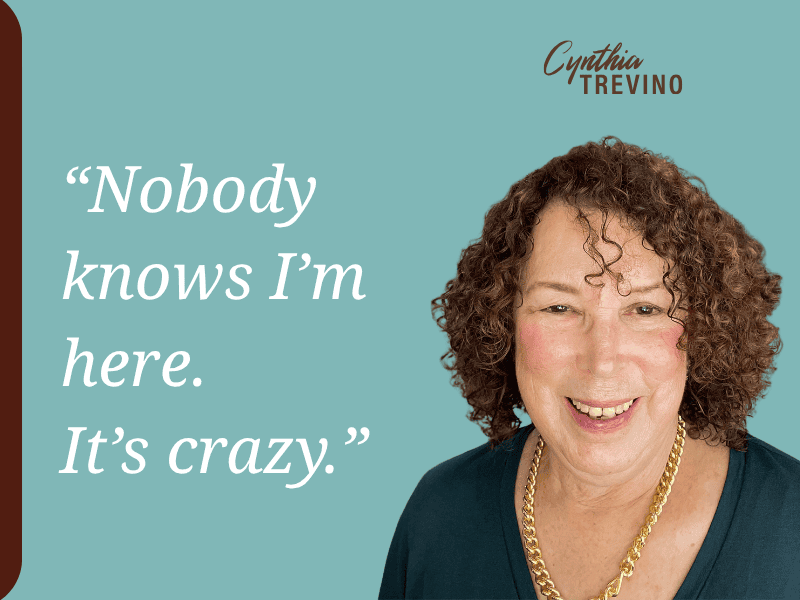
A woman I work with said it exactly like that. “Nobody knows I’m here. It’s crazy.” She wasn’t new to her field. She had real results, real clients, real expertise. She just had no idea how to make any of that visible to the people who needed her most.
If that sentence connected and made you stop for a beat, this post is for you.
Marketing as a solopreneur doesn’t feel hard because you’re doing it wrong. It feels hard because nobody handed you a starting point that actually fits the way you work. You’re not a marketing department. You’re one person with real expertise, a full calendar, and a growing suspicion that the advice you keep finding was written for someone else.
It wasn’t written for you. This is.
Why marketing feels harder than the work you actually do
You got good at what you do by doing it. Years of it. You learned by working with real people, solving real problems, getting real results.
Marketing doesn’t work that way. Or at least, it doesn’t feel that way.
When you sit down to write a post or draft an email, there’s no client in front of you. No problem to solve. Just a blank page and a vague sense that you should say something useful to someone who might need you.
“Do I blog first? Do I email? Do I start on Instagram?” A woman I work with said exactly that. Not because she was confused about marketing strategy. Because nobody had ever handed her a starting point that fit the way she actually thinks and works.
In my nearly 30 years of working with solopreneurs, almost every woman who was genuinely excellent at her work hit this exact wall. Not because she lacked ability. Because she’d never been given an approach that recognized her value, her situation, and the fact that she has zero interest in becoming a marketing expert.
The starting point already exists. You just haven’t been told where to look for it yet.
What changes when you stop trying to invent content and start listening for it
A health coach I worked with a few years ago had never marketed anything in her life. She came from personal training. No marketing background, no content strategy, no idea what to post.
What she did have was a habit of listening. After every session, every casual conversation, every phone call with a potential client, she wrote down what people actually said. Not her interpretation of it. Their words. Eight pages of bullet points over a few months.
When we sat down to look at what she’d collected, her content was already there. She didn’t have to invent a single idea. Every post, every email, every way of describing her work came directly from the language her clients had already handed her.
That’s the shift. Not a new strategy. Not a better platform. Just paying attention the way my health coach client did.
The one thing worth figuring out before you write another word
Before you decide what to write. Before you hand anything to AI and hope it sounds like you. Before you figure out where to show up or how often.
There’s one question that makes all of it easier. It’s not a question most people think to ask: what do you actually bring to your clients that you’ve stopped mentioning because it feels too obvious to say?
The women I work with are almost always sitting on strengths they’ve forgotten to name. Things that come so naturally they don’t register as remarkable anymore. When those stay invisible, your content sounds like everyone else’s, even when your work is anything but. Yet to the right client, those are exactly the things that make her think “that’s the person I’ve been looking for.”
Combine that with the specific words your clients use, and the whole job changes. You’re not inventing content anymore. You’re reflecting back what’s already true, in language that makes the right person stop and think “she’s talking about me.”
That’s what the One-Sentence Value Guide is built to help you do. It surfaces your hidden strengths and your clients’ actual language, and turns them into one clear sentence that finally makes the right person recognize herself in what you write.
About 15 minutes for a first draft. No blank page. No guessing.
Delivered to your inbox. No cost.
Your first draft in about 15 minutes.
.